Tel: +33768734502 | Email: opusprojectmaneger@gmail.com.

OPUS PROJECT MANAGEMENT
Yacht Refit • Technical Management • Owner Representation
CONTROL THE PROJECT. NOT JUST THE WORK.
Complex yacht refits require more than technical knowledge.
They require a clear scope, controlled programme, commercial discipline, coordinated contractors, early identification of risk and accurate communication between the yacht, shipyard, Owner’s Representative, Class and specialist teams.
OPUS provides independent senior project-management support for yacht refit, repair, technical recovery and completion programmes from initial scope and planning through commissioning, sea trials, redelivery and close-out.
25+ years yacht-industry experience
Yachts from 40m to 80m
Projects approximately €800k–€6m
Up to 35 contractors coordinated
Up to 7 yacht projects managed concurrently
PROJECT MANAGEMENT
The role of the Project Manager is to maintain control of the complete project rather than individual technical disciplines in isolation.
This means establishing an agreed baseline, understanding the contractual scope, maintaining the programme, controlling commercial exposure, managing technical interfaces, identifying risk before it affects delivery and ensuring the client receives accurate information on which decisions can be made.
OPUS project management is based on practical shipyard experience combined with structured project-control principles.
PROJECT INITIATION
At project commencement, the objective is to establish a common understanding of what is being delivered, by whom, at what cost and by when.
This includes:
-
Approved Scope of Work and contractual review
-
Project budget and commercial baseline
-
Master programme and key milestones
-
Work-package responsibilities
-
Contractor and stakeholder interfaces
-
Reporting procedures
-
Risk and issue controls
-
Decision and approval responsibilities
-
Class, Flag and survey requirements
-
Commissioning and redelivery criteria
PROJECT GOVERNANCE & CONTROLS
Effective yacht project management relies on a governance structure capable of continuously measuring programme, cost, scope, quality and risk.
The project-control framework typically includes:
Scope Control
Approved Scope of Work, work packages, technical deliverables and responsibility boundaries.
Programme Control
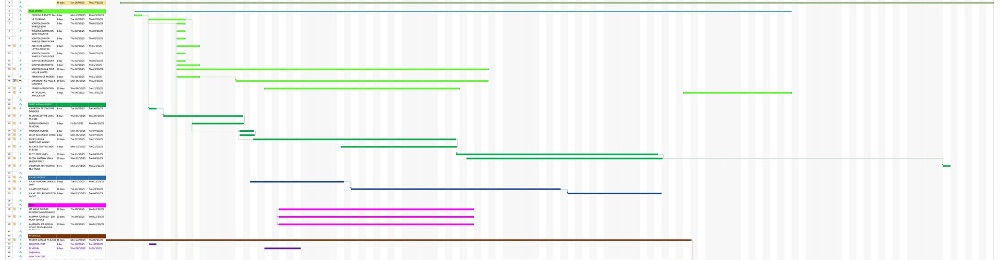
Microsoft Project master programme, milestones, dependencies, short-term look-ahead and recovery actions.
Commercial Control
Budget, quotations, subcontractor costs, additional works, progress valuations, variation control, committed cost and forecast.
Risk & Issue Management
Identification of emerging technical, commercial and programme threats, assessment of impact and implementation of mitigation before critical milestones are affected.
Change Control
Technical evaluation of supplementary work, development of alternative solutions, assessment of cost and programme consequences and formal client approval before implementation.
Quality Control
Onboard inspection, contractor follow-up, corrective actions, testing and documented acceptance.
Reporting
Daily operational coordination supported by formal weekly reporting covering progress, programme, cost, risk, decisions required and forecast completion.
Close-Out
Punch lists, commissioning, harbour and sea trials, technical records, final acceptance, financial review and lessons learned.
HOW A LIVE REFIT IS MANAGED
A yacht refit is not controlled from behind a desk.
A typical working day combines programme, commercial and technical management.
The programme is reviewed and updated before the daily Captain meeting so that completed work, current activity, the next 24 hours and emerging risks can be discussed against current information.
Internal yard teams and coordinators are then briefed on changes, priorities, constraints and developing issues.
Onboard inspections verify contractor progress, workmanship and actual percentage completion.
Technical matters are followed through with Class, Flag, naval architects, engineers, manufacturers and specialist contractors.
Commercial activity continues in parallel through quotations, supplementary works, subcontractor negotiations, progress billing and margin control.
Heavy lifts, crane operations, access, material movements and other yard interfaces are planned against the project programme.
This combination of technical presence, commercial control and structured reporting keeps the yacht, yard and Owner’s team working from the same project position.
COMMERCIAL & CHANGE MANAGEMENT
Unforeseen work is an inevitable part of major yacht refit.
The objective is not to prevent change. It is to control it.
When an unforeseen condition is identified, OPUS establishes the technical requirement, develops appropriate repair options, obtains contractor pricing and assesses both programme and cost consequences.
Where more than one viable solution exists, the client is presented with clear alternatives.
For example:
Option A — increased cost / shorter programme
Option B — lower cost / increased programme duration
Once the client has approved the preferred solution, scope, quotation and programme are updated and the work is controlled through execution and billing.
This protects the client from uncontrolled supplementary expenditure while allowing the project to continue without unnecessary delay.
PROJECT EXPERIENCE
Project experience includes yacht refits and technical programmes ranging approximately from €800k to €6m, on motor and sailing yachts from approximately 40m to 80m.
Responsibilities have included management of up to 35 contractors and portfolios of up to seven concurrent yacht projects.
On one four-month-plus refit, an initial contracted scope of approximately €600k developed into a final approved project value of approximately €1.8m after additional technical requirements were identified.
Approximately €1.2m of supplementary work was developed through technical assessment, contractor quotations, option analysis, client negotiation, formal approval and controlled delivery.
The significance was not simply the increase in project value. It demonstrated effective scope development, client confidence, commercial control, variation management and project delivery.